Tampa’s waterfront has long been the heartbeat of the city, a living, breathing corridor that has shaped its economy, culture, and identity. Today, visitors marvel at the bustling port, scenic promenades, and lively entertainment districts, but Tampa’s waterfront was not always this vibrant. Its story begins centuries ago, in a natural harbor where early communities laid the foundations for what would become one of Florida’s most dynamic urban centers.
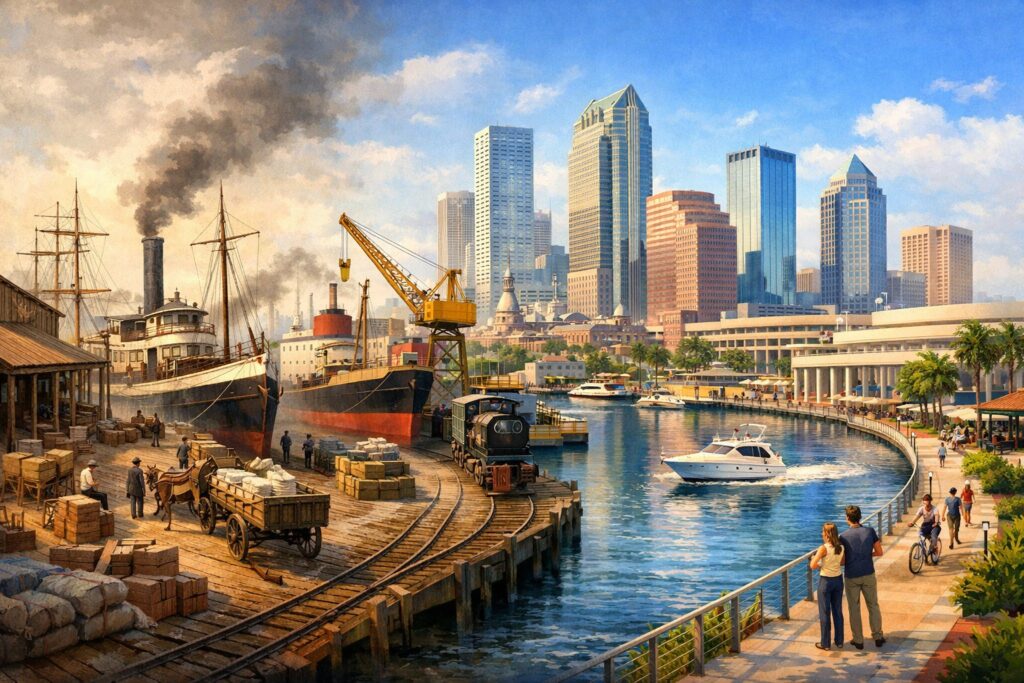
From Quiet Harbor to Early Settlement
Before European settlers arrived, the Tampa Bay area was home to Native American tribes, who relied on the rich waters of the Hillsborough River and Tampa Bay for fishing, transportation, and trade. The natural harbor provided a safe haven for boats and small settlements, but the area remained largely isolated until the early 19th century.
The establishment of Fort Brooke in 1824 marked Tampa’s first step toward organized urban development. Originally a military outpost, the fort attracted merchants, laborers, and settlers who saw opportunity in the security and resources it offered. Supply shipments, local trade, and small-scale construction became the first sparks of economic activity along the waterfront. While Tampa was still a modest riverside settlement, the stage was being set for significant growth.
Steamboats, Railroads, and the Birth of Commerce
By the mid-1800s, steamboats began to dominate the Hillsborough River, connecting Tampa with ports across the Gulf Coast and central Florida. Local farmers and ranchers used these vessels to transport cattle, citrus, and timber, slowly transforming the waterfront into a hub of regional commerce.
The arrival of the railroad in the 1880s supercharged this development. Suddenly, goods could move faster and more efficiently from the interior of Florida to Tampa’s waterfront, making the city a key node in trade networks. Warehouses, piers, and small shipyards emerged along the riverbanks, signaling Tampa’s transformation from a quiet settlement into a bustling port city. Many of these commercial buildings included offices, storage rooms, secured entrances, and other practical features needed to manage growing inventories and daily operations.
The Cigar Industry and Waterfront Expansion
One of the most influential chapters in Tampa’s waterfront history was the rise of the cigar industry in the late 19th century. Cuban immigrants, skilled in the art of cigar-making, settled in nearby Ybor City and brought with them not only expertise but also cultural traditions that shaped Tampa’s identity.
The waterfront became a lifeline for this industry, facilitating the import of raw tobacco and the export of finished cigars. This industrial activity spurred urban growth, with new roads, bridges, and warehouses reshaping the waterfront. Residential neighborhoods sprouted nearby to house workers, blending commercial and community life in a uniquely Tampa way.
Transforming Into a Modern Port
The early 20th century marked a turning point for Tampa’s waterfront as modernization and industrialization took hold. The Port of Tampa expanded dramatically, with deeper channels, larger docks, and specialized facilities for cargo and passenger ships. The waterfront evolved into a complex network of warehouses, shipping yards, and transportation hubs, supporting Tampa’s growing role as a regional economic powerhouse.
Public access and recreation were also considered during this period. Parks and riverfront pathways began to emerge, providing spaces where commerce and community life could coexist. The waterfront became not just a center of industry but also a place where residents could gather, connect, and enjoy the scenic beauty of the river.
Post-War Growth and Urban Transformation
After World War II, Tampa experienced a surge in population and economic activity, and the waterfront reflected this change. The shipping industry diversified, tourism grew, and urban redevelopment reshaped the riverfront. Historic warehouses were repurposed into shops and restaurants, while new developments created a modern skyline overlooking Hillsborough Bay.
The city invested in infrastructure that enhanced connectivity and public access. Bridges and roadways linked downtown Tampa to the waterfront, and the Tampa Riverwalk was conceived as a scenic corridor combining recreation, culture, and commerce. Today, the Riverwalk stretches for miles, offering both locals and visitors a chance to experience Tampa’s history alongside contemporary urban life.
Resilience Through Challenges
Tampa’s waterfront has also faced its share of challenges. Hurricanes, flooding, and economic fluctuations have tested the city’s resilience. Each time, however, Tampa has adapted, combining strategic planning with community involvement to maintain the waterfront’s vitality. Modern initiatives prioritize sustainability, flood mitigation, and preservation of historic structures, ensuring that the waterfront remains both functional and beautiful.
A Hub of Commerce, Culture, and Community
In the 21st century, Tampa’s waterfront is a multifaceted hub. The Port of Tampa continues to be a major center for cargo and trade, while the surrounding neighborhoods have become cultural and recreational destinations. Festivals, markets, concerts, and waterfront dining bring the area to life, reflecting the city’s diverse heritage and modern dynamism.
From its early days as a sheltered harbor to its current status as a thriving economic and cultural corridor, Tampa’s waterfront demonstrates the power of location, vision, and resilience. It is more than a river or a port—it is a testament to the city’s history, a driver of its economy, and a symbol of its future.
The written content on this page was generated by ChatGPT.
