Long before Tampa, Florida, transformed into a sprawling Sunbelt metropolis characterized by modern high-rises and waterfront districts, it operated as an isolated, swampy port city with a lawless underbelly. Throughout much of the 20th century, organized crime was not merely a shadow economy operating on the fringes—it served as a powerful engine that influenced city planning, local elections, law enforcement, and daily community life across the Tampa Bay area.
To understand modern Tampa, one must explore the history of its underworld: a narrative shaped in Ybor City’s cigar factories, sustained by illegal numbers lotteries, exposed in national congressional hearings, and governed by one of the most secretive Mafia dynasties in American history.
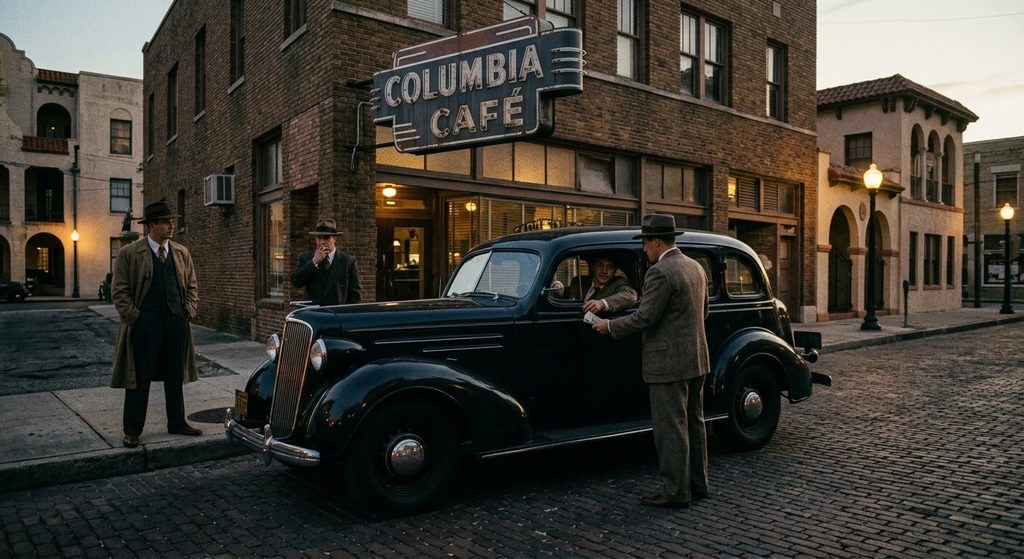
1. The Roots of Tampa’s Underworld: Bolita, Cigars, and Immigrant Communities
The foundation of organized crime in Tampa was laid in the late 19th century. In 1885, industrialist Vicente Martinez Ybor relocated his cigar manufacturing operations to a parcel of land just east of downtown Tampa, creating Ybor City. The booming cigar industry quickly drew thousands of Cuban, Spanish, and Sicilian immigrants seeking industrial work.
Along with rich cultural traditions, mutual aid societies, and distinctive architecture came an illicit numbers game imported from Cuba: bolita.
┌─────────────────────────────────────────────────────────────┐
│                   THE MECHANICS OF BOLITA                   │
├─────────────────────────────────────────────────────────────┤
│ 1. 100 small wooden balls (bolitas) numbered 1 to 100 were │
│    placed inside a cloth or velvet sack.                    │
│ 2. Players bought tickets corresponding to specific numbers│
│    at neighborhood cafes, cigar factories, and shops.       │
│ 3. A tied-off section holding a single ball was cut open or │
│    drawn publicly, declaring the winning payout.             │
└─────────────────────────────────────────────────────────────┘
Bolita grew into an economic mainstay across working-class neighborhoods. Tiny bets placed by cigar rollers accrued into millions of dollars in cash flow for early syndicate leaders.
When National Prohibition went into effect in 1920 via the 18th Amendment, Tampa’s deep harbors, isolated coastal inlets, and proximity to Cuba made it a natural gateway for rum-running. Local syndicate operators merged their bolita cash flows with booze-smuggling routes, laying the groundwork for organized criminal enterprise across the region.
2. The “Era of Blood” (1920s–1930s): A Gangland Turf War
By the late 1920s, several distinct criminal factions fought for total control of Tampa’s lucrative bolita and bootlegging markets. The resulting conflict developed into what local historians refer to as the “Era of Blood”—a period defined by drive-by shootings, unsolved slayings, and political corruption along the brick streets of Ybor City and West Tampa.
The conflict was largely driven by two rival bosses:
- Charlie Wall (“The White Shadow”): The rebellious son of an influential Anglo political family, Wall established the city’s early bolita empire. He maintained control through a widespread network of political payoffs to city officials and police departments.
- Ignacio Antinori: A Sicilian-born mobster who established an opposing syndicate, expanding into narcotics pipelines alongside gambling operations.
                     ERA OF BLOOD FACTIONS
                     ┌───────────────────┐
                     │   CHARLIE WALL    │
                     │  (Anglo Faction)  │
                     └─────────┬─────────┘
                               │
                      [ Turf War 1920s-30s ]
                               │
                     ┌─────────┴─────────┐
                     │ IGNACIO ANTINORI  │
                     │ (Sicilian Faction)│
                     └───────────────────┘
The feud resulted in the deaths of key figures on both sides. Antinori was assassinated in 1940 at a restaurant in Tampa. The decades of violence destabilized early leadership, creating an opportunity for a unified syndicate to take control.
3. The Trafficante Dynasty: Unification and International Expansion
Out of the turmoil rose Santo Trafficante Sr., a cautious leader who recognized that street violence disrupted business and attracted unnecessary law enforcement scrutiny. Through the 1930s and 1940s, Trafficante Sr. consolidated scattered Italian and Hispanic factions into a singular organization: the Tampa crime family.
Trafficante Sr. established relationships with major national Mob figures—including Lucky Luciano, Frank Costello, and Meyer Lansky—positioning Tampa as a strategic location for interstate vice operations.
                 THE TAMPA MOB LEADERSHIP TIMELINE

  1920s–1930s           1940–1954              1954–1987          1987–2025
┌──────────────┐     ┌──────────────┐       ┌──────────────┐   ┌──────────────┐
│ Charlie Wall │ ──► │Santo Traffic-│  ──►  │Santo Traffic-│──►│Vincent       │
│ & Antinori   │     │ante Sr.      │       │ante Jr.      │   │LoScalzo      │
└──────────────┘     └──────────────┘       └──────────────┘   └──────────────┘
 (Era of Blood)      (Consolidation)        (The Silent Don)   (Final Decades)
Santo Trafficante Jr.: “The Silent Don”
Following his father’s death in 1954, Santo Trafficante Jr. assumed command of the syndicate. Raised in Ybor City, fluent in English, Italian, and Spanish, Trafficante Jr. expanded the syndicate into an international power:
- The Havana Casino Network: Trafficante Jr. managed several luxury casino-resorts in Havana, Cuba—including the Sans Souci—under the regime of Fulgencio Batista, generating significant profits until the Cuban Revolution in 1959 nationalized private properties.
- Cold War Intelligence Operations: In the early 1960s, Trafficante Jr. was recruited by CIA intermediaries in covert plots targeting Cuban leader Fidel Castro.
- A Low-Profile Strategy: Known as “The Silent Don,” Trafficante Jr. maintained a low public profile. Despite decades of surveillance, subpoenas, and federal trials, he never served time in a federal prison.
4. The Kefauver Committee Hearings and the Slaying of Charlie Wall
In December 1950, federal scrutiny arrived in Tampa when the U.S. Senate Special Committee to Investigate Crime in Interstate Commerce, chaired by Tennessee Senator Estes Kefauver, convened hearings in the city.
┌─────────────────────────────────────────────────────────────┐
│            THE 1950 KEFAUVER HEARINGS IN TAMPA              │
├─────────────────────────────────────────────────────────────┤
│ • Highlighted widespread payoffs to local law enforcement.  │
│ • Displayed charts detailing over 20 years of unsolved     │
│   gangland homicides in the region.                         │
│ • Prompted major figures, including the Trafficantes, to    │
│   temporarily evade process servers.                        │
└─────────────────────────────────────────────────────────────┘
The star witness of the Tampa hearings was retired boss Charlie Wall. Aged and out of power, Wall testified openly about the origins of local bolita, political bribery, and his rivalry with Santo Trafficante Sr.
Wall lived safely for five years following his testimony. However, in April 1955, he was brutally murdered in his home. Wall’s death signaled the complete elimination of old-guard opposition to the Trafficante family.
5. Federal Law Enforcement Crackdowns and Decline
From the 1970s through the 1990s, changing demographics, urban development, and federal legal tools gradually weakened the syndicate’s infrastructure:
- RICO Prosecutions: The implementation of the Racketeer Influenced and Corrupt Organizations (RICO) Act allowed federal prosecutors to target syndicate leadership directly.
- Undercover Operations: Infiltration by federal agents—including undercover work tied to the FBI’s Donnie Brasco investigation—led to indictments targeting Florida mob figures and associates.
- Leadership Transition: Santo Trafficante Jr. died of natural causes during heart surgery in Houston in March 1987. Leadership subsequently passed to Vincent LoScalzo, who oversaw a diminishing operation until his death in 2025.
6. Historical Legacy of the Mob Era in Tampa
The legacy of organized crime remains visible in Tampa’s physical landscape and cultural history:
| Historical Subject | Contemporary Impact in Tampa |
| Ybor City Architecture | Historic brick structures, former mutual aid societies, and dining venues maintain physical ties to the era. |
| Cultural Heritage | Local history tours, museums, and literary works preserve the history of Tampa’s industrial and underworld development. |
| Municipal Growth | The historical record of civic reform following the Kefauver hearings documents Tampa’s transition into a modernized municipal government. |
Frequently Asked Questions (FAQ)
What was bolita and why was it important in Tampa?
Bolita was an illegal numbers lottery originating in Cuba. It played a major role in early 20th-century Tampa because thousands of working-class residents played daily, creating massive cash reserves that funded early organized crime syndicates.
Who was Santo Trafficante Jr.?
Santo Trafficante Jr. was the long-time boss of the Tampa crime family from 1954 until his death in 1987. He managed casino operations in pre-revolution Havana, maintained relationships with national Mafia leaders, and avoided ever serving time in federal prison.
What was the “Era of Blood”?
The “Era of Blood” refers to a violent period during the 1920s and 1930s when rival criminal factions fought for control over bootlegging and gambling in Ybor City and West Tampa.
Did the Mafia operate in Ybor City?
Yes. Ybor City was the focal point for early vice operations, including bolita lotteries, illegal speakeasies, and syndicate meeting places due to its dense immigrant workforce and thriving commercial district.
Generated by Google Gemini AI.
