When people walk through Tampa today, they see a modern city with gleaming skyscrapers, thriving businesses, and a diverse population. Yet behind this vibrant metropolitan center lies a much older story, one written by the determination and vision of the families who first shaped its foundations. The legacy of Tampa’s founding families is still felt in the city’s economy, neighborhoods, and cultural identity, reminding residents and visitors alike that history never fully fades—it lives on in the places we inhabit every day.
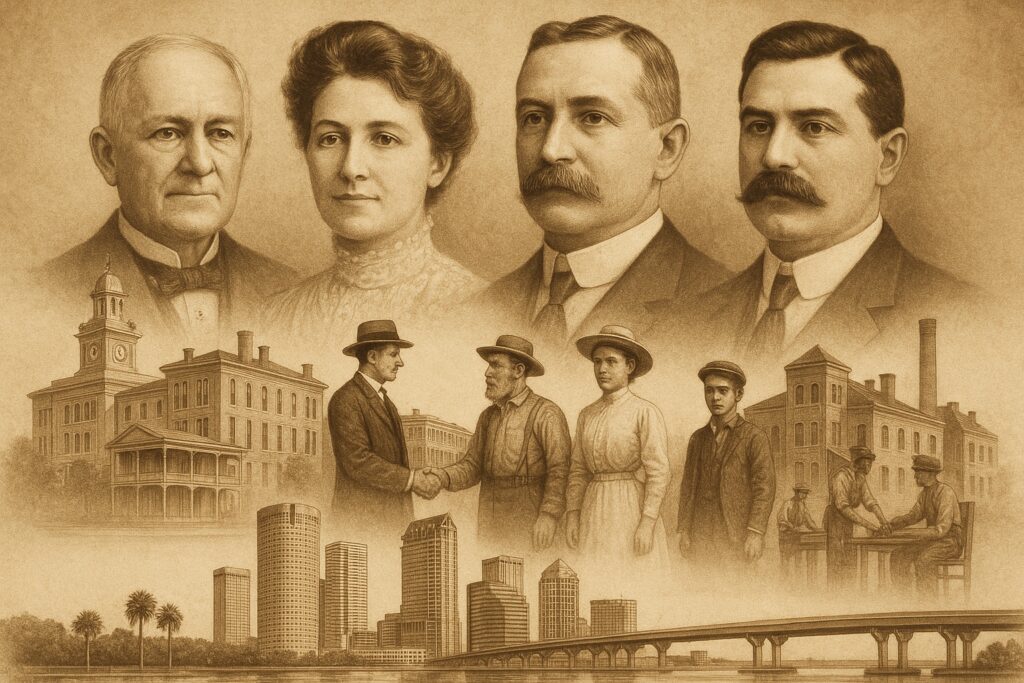
Tampa’s Earliest Foundations
Before Tampa became an incorporated city in 1855, the region was home to Indigenous groups such as the Tocobaga and later the Seminole people. These communities lived off the land, hunting, fishing, and trading along the Gulf Coast. European contact brought conflict and displacement, and by the early 19th century, American settlers began to slowly move into the area. The establishment of Fort Brooke in 1824 marked the first turning point. While it was created as a military outpost during the Seminole Wars, it attracted civilian families who would endure hardship and isolation to lay down permanent roots in a challenging environment.
The Ybor Family and the Birth of a Latin Quarter
A second great turning point in Tampa’s story arrived with the decision of Vicente Martinez-Ybor to relocate his cigar manufacturing operations from Key West to Tampa in the 1880s. This was not merely a business decision—it was a catalyst that transformed the city’s future. Ybor brought skilled cigar workers from Cuba, Spain, and Italy, creating a unique cultural melting pot that gave rise to Ybor City, Tampa’s famed Latin Quarter.
The Ybor family and their associates did more than establish factories. They built housing for workers, established mutual aid societies, and fostered community institutions that still echo today. The immigrant families who arrived under Ybor’s influence created traditions in food, music, and festivals that remain central to Tampa’s identity. The city’s Cuban sandwiches, annual festivals, and historic cigar factories are all part of this living legacy.
The Plant Family and the Power of the Railroad
While cigars brought cultural vibrancy, it was Henry B. Plant who connected Tampa to the wider world. In the late 19th century, Plant’s expansion of the railroad into Tampa opened the city to national markets, bringing goods, tourists, and investment. His decision to build the luxurious Tampa Bay Hotel along the Hillsborough River signaled that Tampa was no longer a remote frontier—it was becoming a destination.
The Plant family’s influence extended far beyond the economy. Their developments encouraged settlement, attracted new businesses, and boosted Tampa’s profile across the nation. Today, the former Tampa Bay Hotel stands as a landmark, housing the University of Tampa and the Henry B. Plant Museum, reminders of how one family’s vision helped place the city on the map.
The MacDill Family and Military Legacy
Tampa’s strategic position on the Gulf Coast also made it a critical military site. The establishment of MacDill Air Force Base, named after Colonel Leslie MacDill, ensured that the city played a central role in U.S. military operations. While Fort Brooke brought the first wave of soldiers in the 1820s, the 20th century saw Tampa evolve into a permanent hub of defense and strategy.
Families associated with MacDill became part of Tampa’s civilian growth as well, supporting schools, churches, and local businesses. The base remains active today, hosting U.S. Central Command and Special Operations Command, cementing Tampa’s place as a city that bridges local life with national and international importance.
Other Prominent Families Who Shaped Tampa
Not every influential family gained the spotlight of the Ybors or Plants, but several others left significant marks.
- The Knight family contributed heavily to Tampa’s financial institutions, building banking systems that allowed businesses to grow.
- The Lykes family, beginning with cattle ranching, expanded into shipping and global trade, connecting Tampa to international markets.
- The Cuesta and Rey families, cigar manufacturers in their own right, enriched Tampa’s reputation for craftsmanship and contributed to its economic foundation.
Each of these families not only fueled commerce but also gave back to the community through civic involvement, philanthropy, and cultural preservation. Their names remain tied to streets, buildings, and landmarks across the city.
Immigration and the Broader Legacy
Although founding families often receive the credit, the collective story of Tampa cannot be told without recognizing the immigrant communities that powered its growth. Cuban, Spanish, Italian, and German families arrived in large numbers during the late 19th and early 20th centuries, working in cigar factories or opening small businesses.
These families established social clubs such as Centro Español, Centro Asturiano, and L’Unione Italiana, which offered healthcare, cultural gatherings, and community support. These institutions played a vital role in uniting immigrant groups and preserving traditions, many of which continue today in Ybor City’s festivals and historic districts.
In addition to cultural and social support, many early residents understood the importance of keeping your home safe, whether through strong doors, locks, or community vigilance, ensuring their families and belongings were protected as they built a new life in Tampa.
The Continuation of a Legacy
Modern Tampa is a city that thrives on innovation, tourism, healthcare, and international commerce, but the foundation of this success lies in the determination of its earliest families. Visitors to Ybor City can still walk down Seventh Avenue and see brick cigar factories standing as monuments to the past. The University of Tampa, with its Moorish minarets, remains a testament to Plant’s influence. Meanwhile, MacDill Air Force Base continues to anchor Tampa as a city of both local and global importance.
What makes Tampa unique is not just its rapid modernization but the way it carries its past forward. The city has preserved its immigrant heritage, embraced its cultural diversity, and honored the contributions of its founding families. Their vision, labor, and resilience live on in the neighborhoods, traditions, and institutions that make Tampa distinct.
The founding families of Tampa did far more than survive on a frontier—they carved out a city that would grow into one of Florida’s most dynamic hubs. From cigar moguls and railroad pioneers to immigrant craftsmen and military leaders, each family left behind a legacy woven into Tampa’s identity. Today, as Tampa continues to expand and redefine itself, it does so on the foundation built by those families whose courage, vision, and focus on community security transformed an untamed landscape into a thriving community.
The written content on this page was generated by ChatGPT.
