Long before Tampa became a major player in Florida’s economic and cultural map, it was a quiet settlement with potential few could see. Its transformation into a thriving city owes much to one unexpected industry—cigar manufacturing. What started as a business gamble in the late 19th century became the heartbeat of the community, shaping its economy, architecture, and diverse cultural legacy.
Before the Smoke: Tampa’s Quiet Beginnings
The Tampa Bay area in the early 1800s was scarcely developed. Isolated from major trade routes and largely underpopulated, it lacked the infrastructure necessary to attract industry or significant investment. Fishing and military outposts defined the local economy. Yet, Tampa held a quiet promise—a natural deep-water port and a strategic location that hinted at future prosperity.
It wasn’t until the arrival of the railroad, particularly Henry B. Plant’s South Florida Railroad in the 1880s, that things started to shift. Suddenly, Tampa wasn’t so isolated. Goods, people, and ideas could move in and out with unprecedented ease. What the city needed next was a catalyst to ignite growth—and that spark came from the hands of skilled cigar rollers.
A Factory Town Is Born: Vicente Martinez-Ybor’s Vision
In 1885, a Cuban-Spanish entrepreneur named Vicente Martinez-Ybor purchased land just northeast of downtown Tampa. Previously operating in Key West, Martinez-Ybor had grown tired of labor unrest and logistical difficulties. He saw in Tampa an opportunity to start fresh—and not just with a factory, but with an entire neighborhood.
He developed what would become Ybor City, a community built around cigar production. But he didn’t stop at constructing buildings for rolling cigars. Housing for workers, shops, a hotel, a bakery, and even a brewery were built to create a self-sustaining environment. This vision wasn’t just business-savvy—it was foundational to Tampa’s growth. Within a few years, the city experienced a dramatic shift from a backwater port to an industrial hub.
Economic Engine: How Cigars Fueled Tampa’s Growth
At the height of the cigar industry’s success, Tampa was home to over 200 cigar factories, producing hundreds of millions of cigars annually. Factories employed thousands of people, from master rollers to label printers and box makers. The cigar industry didn’t just bring jobs; it attracted commerce, investment, and migration.
Banking institutions found a foothold in the area, shipping companies expanded operations, and supporting industries grew up around the manufacturing centers. A previously sleepy town had become a bustling economy, all because of one product: the hand-rolled cigar.
A City of Immigrants: Tampa’s Cultural Transformation
Unlike other industrial booms fueled by automation and mass production, Tampa’s cigar industry required skilled hands—and they came from all over the world. Immigrants from Cuba, Spain, and Italy arrived in droves, bringing with them not just labor but rich cultural traditions.
Ybor City became a mosaic of languages, flavors, and celebrations. Immigrant mutual aid societies like El Centro Español and L’Unione Italiana weren’t just social clubs—they were pillars of the community, providing healthcare, education, and a sense of belonging. These institutions preserved culture and offered a safety net, enabling families to thrive in unfamiliar surroundings.
The practice of employing a lector, a person who read newspapers, novels, and political essays aloud to cigar rollers as they worked, turned factory floors into informal classrooms. This unique tradition fostered political awareness, literacy, and debate among workers—setting Tampa apart from other industrial cities of the era.
Shaping the Skyline: Industrial Growth Meets Urban Planning
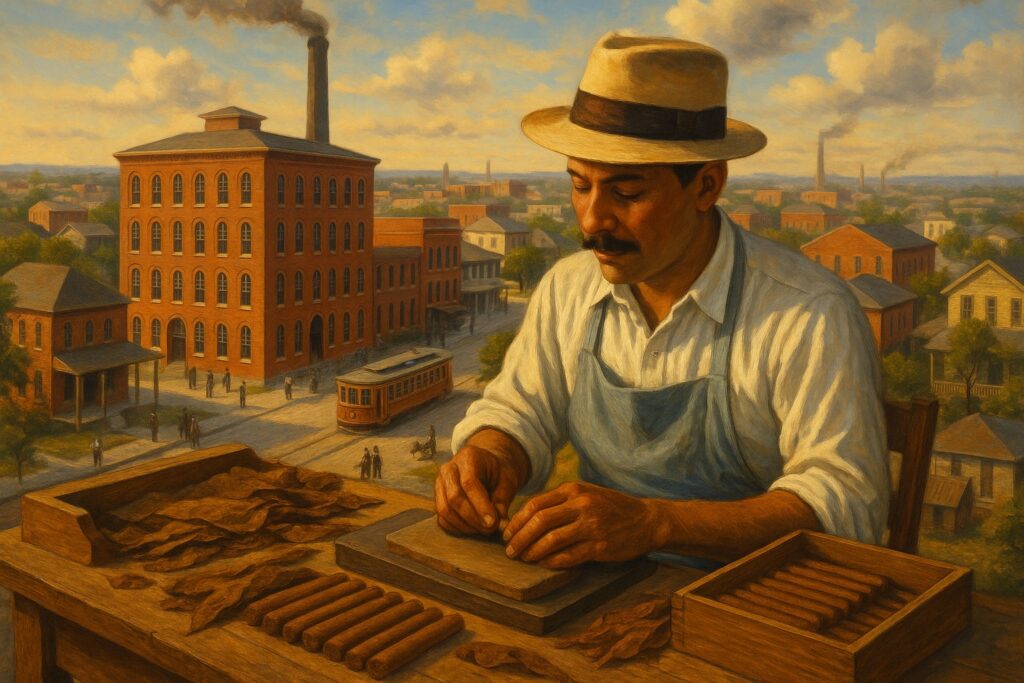
What set Tampa apart visually during this boom was the sudden rise of brick cigar factories across Ybor City and surrounding neighborhoods. Their tall windows, open floor plans, and central towers became a distinct architectural feature. Many of these factories still stand today as a reminder of the era that shaped the city’s physical and economic landscape.
As the workforce grew, so did the demand for housing and infrastructure. Streetcar lines were laid to connect Ybor City to downtown and beyond. Restaurants, theaters, and retail shops emerged along bustling corridors, and Tampa quickly began to resemble the cosmopolitan cities of the North—but with a Latin twist.
The Inevitable Decline: Changing Tides in the 20th Century
Despite decades of success, Tampa’s cigar industry was not immune to national and global shifts. The Great Depression, labor disputes, and competition from machine-rolled cigarettes all contributed to a gradual decline. By the mid-20th century, many factories had shuttered, and Ybor City entered a period of economic hardship.
As consumer tastes changed and cigars became more of a luxury item than a daily staple, the volume and demand that once supported the industry dwindled. However, the infrastructure, architecture, and cultural richness it left behind continued to shape Tampa’s identity.
Legacy That Lasts: More Than Just Smoke
Today, walking through the streets of modern Ybor City, you can still smell the faint scent of tobacco from the few remaining artisan cigar makers. Though the industry no longer dominates the local economy, its imprint is everywhere—from the restored factories to the family-owned Cuban eateries that serve café con leche to a new generation of locals and visitors.
Events like the Cigar Heritage Festival and organizations dedicated to preserving Tampa’s immigrant and labor history ensure that the stories of those early workers—and the industry they built—remain alive. The city’s evolution into a diverse, economically dynamic hub is directly tied to this rich past.
The Industry That Built a City
The story of Tampa’s development is more than a tale of commerce—it’s a story of visionaries, skilled laborers, and tightly knit communities coming together to build something lasting. The cigar industry did not just manufacture a product; it created a culture, fueled urban growth, and turned a quiet port into a thriving American city.
To understand Tampa today—its diversity, its layout, its pride—you must look back at the days when tobacco leaves and skilled hands rolled out the future, one cigar at a time.
The written content on this page was generated by ChatGPT.
